EV charging at supermarkets: everything you need to know

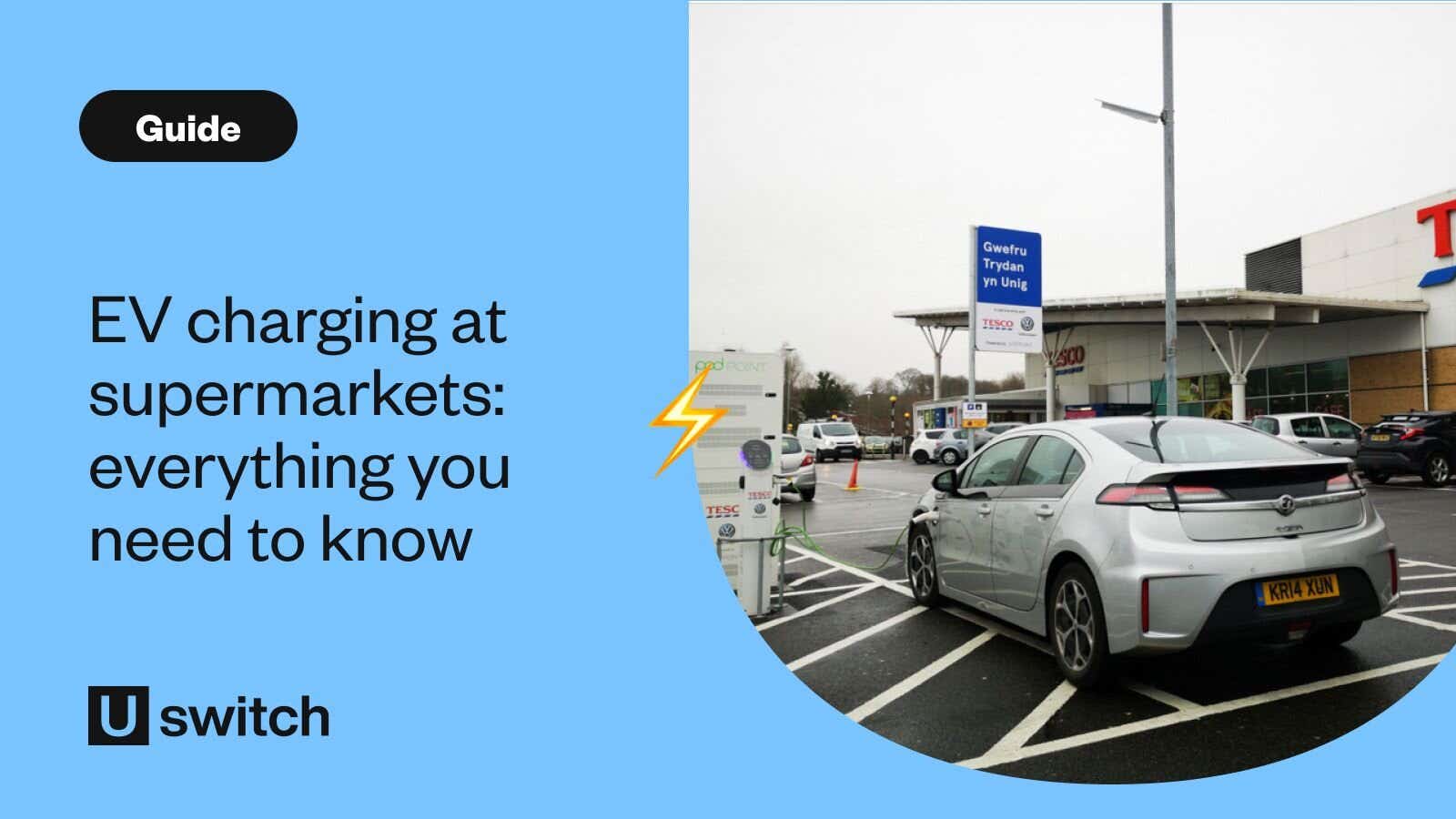
EV charging while you shop: what’s on offer?
Many UK supermarket chains now offer EV charging, making it easier to top up your vehicle while you shop. Tesco, Lidl, Sainsbury's and ASDA are among the supermarkets providing charging points across the country, but other major retailers such as IKEA have charging points too.
Supermarkets typically offer a mix of fast (7kW), rapid (22kW), and ultra-rapid (50kW+) chargers. Charging speed varies, with ultra-rapid chargers providing the quickest charge.
Supermarket EV charging costs compared
EV charging costs at supermarkets can vary depending on the retailer, location and type of charger. Here’s an overview of average costs at major UK supermarket chains:
| Supermarket | Charging speeds | Charging cost | Free charging available? |
|---|---|---|---|
| Aldi | Up to 22kW usually, but up to 160kW in newer stores | £0.40 - £0.62/kWh | Some non-rapid chargers available |
| ASDA | Up to 22kW | £0.59 - £0.79/kWh | No |
| Lidl | Up to 50kW | £0.40 - £0.74/kWh | Limited non-rapid chargers available - discounts are available with the Lidl Plus app |
| Morrisons | Up to 50kW | Varies by location | Rare |
| Sainsbury's | Up to 150kW | £0.49-£0.72/kWh | No - 1 Nectar point can be earned for each pound spent though |
| Tesco | Up to 75kW | £0.44 - £0.69/kWh | No - 1 Clubcard point can be earned for each pound spent though |
Note: Charger types and prices may vary by location across the UK
Pros and cons of charging at supermarkets
While supermarket charging offers plenty of convenient advantages, there are a few disadvantages to consider too:
Pros
Convenient locations, often with extended hours of operation.
Ability to charge while running errands or shopping.
Wide availability of charging stations at major retailers.
Cons
Potential queues, especially during peak times.
Charging speeds may be slower at some stations.
Availability can vary, and chargers may be occupied when you need them.
Is there any free supermarket charging available?
Some supermarkets have historically offered free charging, often as part of a limited-time promotion or loyalty program. However, by 2026, free charging has become rare, with most supermarkets now charging for use across the UK. It's still a good idea to keep an eye on any temporary promotions or loyalty rewards that may include free or discounted charging, though.
Which factors influence supermarket EV charging prices?
Several factors influence supermarket charging costs. These include:
- Location: Prices may vary based on the region or proximity to major cities
- Charge speed: Faster chargers like ultra-rapid typically cost more than slower chargers
- Partner networks: Pricing may differ depending on the charging network provider
What's real-time pricing?
Charging costs can fluctuate, so checking real-time pricing through apps like Pod Point and Zap-Map is crucial. These apps provide updated cost information and help you locate available public chargers at your chosen supermarket or retailer.
What EV charging brands are available at supermarkets?
Each supermarket tends to partner with different charging providers. Here's a breakdown of some of the main supermarket chains and the charging brands they partner with:
- Tesco: Tesco has partnered with Pod Point for its EV charging stations. Free charging has largely been phased out and most locations operate on a pay-as-you-go basis.
- ASDA: ASDA's charging options can vary, but the supermarket often partners with GeniePoint and Instavolt. Availability can fluctuate, so it's best to check ahead.
- Sainsbury's: Sainsbury's offers EV charging primarily through Smart Charge. Pricing can vary by site but is typically a flat rate which allows you to pay-as-you-go.
- Lidl: Lidl provides its own charging stations rather than through a partnership. Availability and pricing differ across stores, and most locations operate on a pay-to-use model.
- Aldi partners with Drax Electric for its charging points, enabling it to offer rapid speeds at its newer stores.
- IKEA: IKEA previously offered free charging, but most locations now charge for use, typically with GRIDSERVE chargers.
Do I need to be a customer to use supermarket EV chargers?
Most supermarket EV chargers are open to the public and don’t require you to be a store customer. However, some parking restrictions may apply, so check any relevant signs or notifications. Some stores may also set time limits or require a purchase for extended charging sessions.
While most standard retailers generally allow non-customers to use their chargers, membership retailers like Costco may restrict access exclusively to their members.
Can I earn loyalty points or rewards when charging my EV?
Sainsbury’s offers extra Nectar points when you use their network to charge your EV, and Tesco lets you collect Clubcard points too. Some other supermarket apps, such as Lidl's, may also provide charging-related bonuses linked to their loyalty schemes.
Reward programs vary by retailer and provider, so it's best to check with the individual store directly for the most up-to-date information.
Supermarket charging vs. home charging on a time-of-use tariff
Public charging can be convenient, but costs add up quickly.
With time-of-use (TOU) tariffs, you can charge at home for as little as 7p/kWh during off-peak hours. Even rapid supermarket charging is rarely cheaper than off-peak home charging, making TOU EV tariffs an ideal option for overnight top-ups. And if you have a smart charger, that’s made simple as you can schedule your charging for the cheapest times.
Home charging on a TOU tariff works best if you have a regular routine which allows you to charge during off-peak windows.
FAQs
Can I leave my car charging at Tesco overnight?
Overnight charging is typically not allowed as it may breach parking time limits set by Tesco. If you exceed the allowed duration at supermarket charging stations, it can lead to a fine.
Which supermarket has the fastest EV chargers?
Morrisons and Lidl typically offer 50kW+ rapid chargers, while some Sainsbury's and Tesco sites provide ultra-rapid charging up to 300kW+ at some locations, offering faster charging speeds if you’re in need of a quick top-up.
Is supermarket charging worth it?
Supermarket charging is great for quick top-ups while running errands. However, it’s not usually cost-effective for regular full charges, and TOU home charging is generally cheaper. Blending both options, though, can offer flexibility and convenience.
How can I find out if my local supermarket offers EV charging?
Check store locators or supermarket websites as many now list EV charger availability. Apps like Zap-Map, ChargePoint or PlugShare provide real-time charger info and reviews for extra insight. Note that not all locations offer chargers and availability often depends on the region and store size.
What types of EV chargers do supermarkets typically have?
Most supermarkets offer fast (7–22kW) or rapid (50kW+) chargers while some even offer ultra-rapid (75kW-300kW+) chargers. Charger speed and provider vary by location, so check online or through dedicated EV charging map apps for specific details.
Are supermarket EV chargers reliable?
Reliability depends on the provider and maintenance. Occasional issues include faulty connectors, limited bays or network outages. Check recent user reviews on charging apps before relying on a public charger.
